

01 / The design
Why we call it Doric.
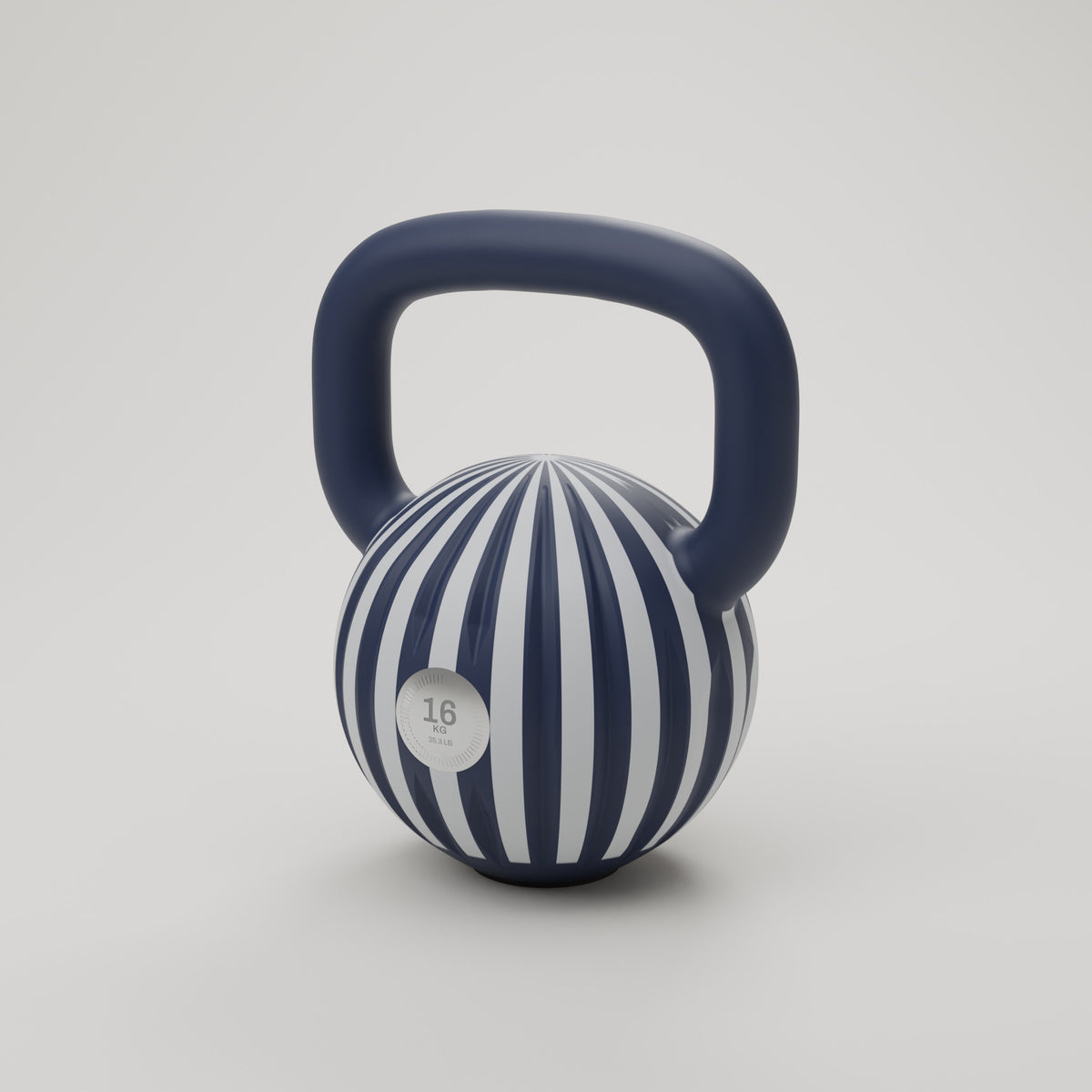
The Doric was the first of the classical orders, and the sparest: no base, no scrolls, a column that Vitruvius said took its proportions from the body of a man. Its masterpiece is the Parthenon, raised by the Athens that gave the world democracy and now an emblem of Western civilization. Each of its columns carries twenty flutes. So does the Doric kettlebell. We looked to antiquity because the beauty that lasts rarely raises its voice. It lives in proportion, in shadow, in the way light runs down a groove. Run a thumb along the fluting and the hand understands before the mind does. In training, it asks to be held. At rest, it asks to be admired, keeping the composure of the stone that gave it its name.
The built world.
If the Tor, its sibling, belongs to weather, to wind shearing across a lake, the Doric belongs to the city. Its surface comes from early Greek architecture, where masons cut a column's flutes only after its drums were stacked in place, so each groove ran unbroken from one stone into the next. Classical sculpture set the proportions of the body and the handle, and the measured air between them. The Greek hydria, the water jar carried home from the fountain house, showed how a handle might rise from a rounded body with something close to gesture.